 Image 1 of 1
Zea mays
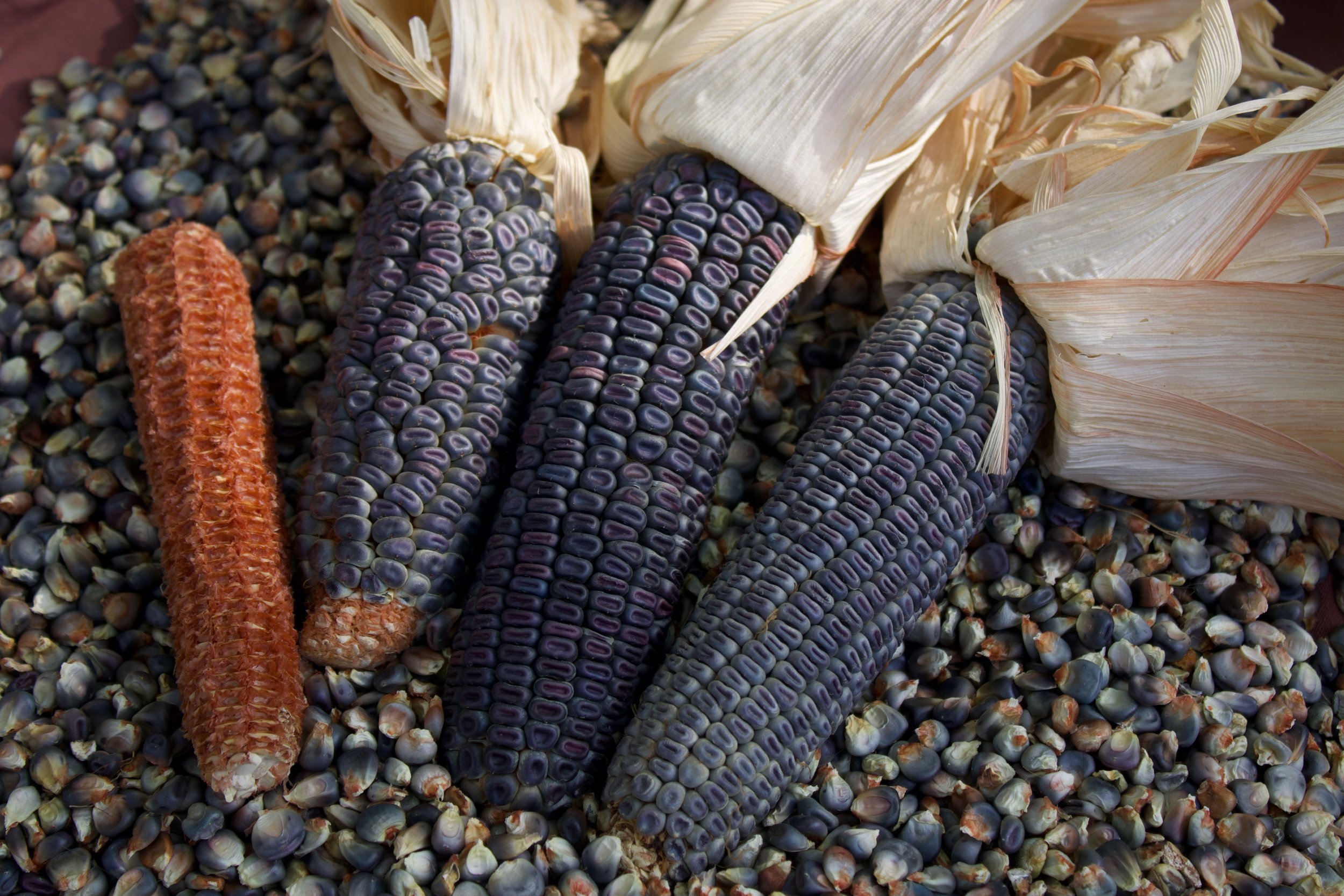
In the 1920s farmer Ernest Strubbe followed his curiosity to began what turned into a lifetime devoted to the breeding of a kaleidoscope of dent corn varieties. Over the decades he selected a painter’s palette of emerald green, red-black, pink, white, orange and his favorite, blue dent. Strubbe’s Blue features solid colored ears of oceanic hues ranging from deep turquiose, true blue to dusky purple. Removing the kernals reveals a hidden surprise: the cobs are a striking terra cotta color, beautifully contrasting the blue kernels. 7 foot tall sturdy, lodge-resistant plants reliably produce two ears per plant. Ears are sizable, up to 8” long and very thick. Excellent for grinding and creating your own blue corn flour.
Growing Information:
Direct sow after last frost or start indoors 3 weeks early and transplant after last frost.
Space plants 8” apart in rows 24" apart. Alternatively plant in hills 36” apart all ways with 6 seeds per hill. If growing pole beans up the stalks, row spacing should be 36”.
Maize is a heavy feeder so provide plenty of compost, we also recommend a fall or spring cover crop of peas or another annual legume to fix nitrogen for the crop in the spring.
Mulch with leaves or whatever you have available to hold moisture and suppress weeds. Make sure soil pH is between 5.8 and 7.0. If plant needs a growing boost water with nitrogen tea or compost tea a few times. If trace minerals are inadequate sprinkle a small amount of woodash in each planting hole.
Harvest Instructions:
Cobs can be dried on the plant OR harvested slightly early and dried inside. We prefer harvesting slightly early to make room for a fall crop. Once coloring has set into the kernels, ears can be harvested and shucked and they will continue to ripen and dry down indoors. Make sure to hang the ears to dry so mold doesn’t develop. We always look forward to adorning our home with beautiful maize garlands for drying! You can also lay ears out on a wire mesh table in a barn or shed. Air flow around the ear is key. Store away from rodents! Once ears are dry you can break cobs in half and rub your fingers over them to loosen the kernels from the cob. There are also inexpensive handheld corn-shuckers that can assist.